Feed type detection
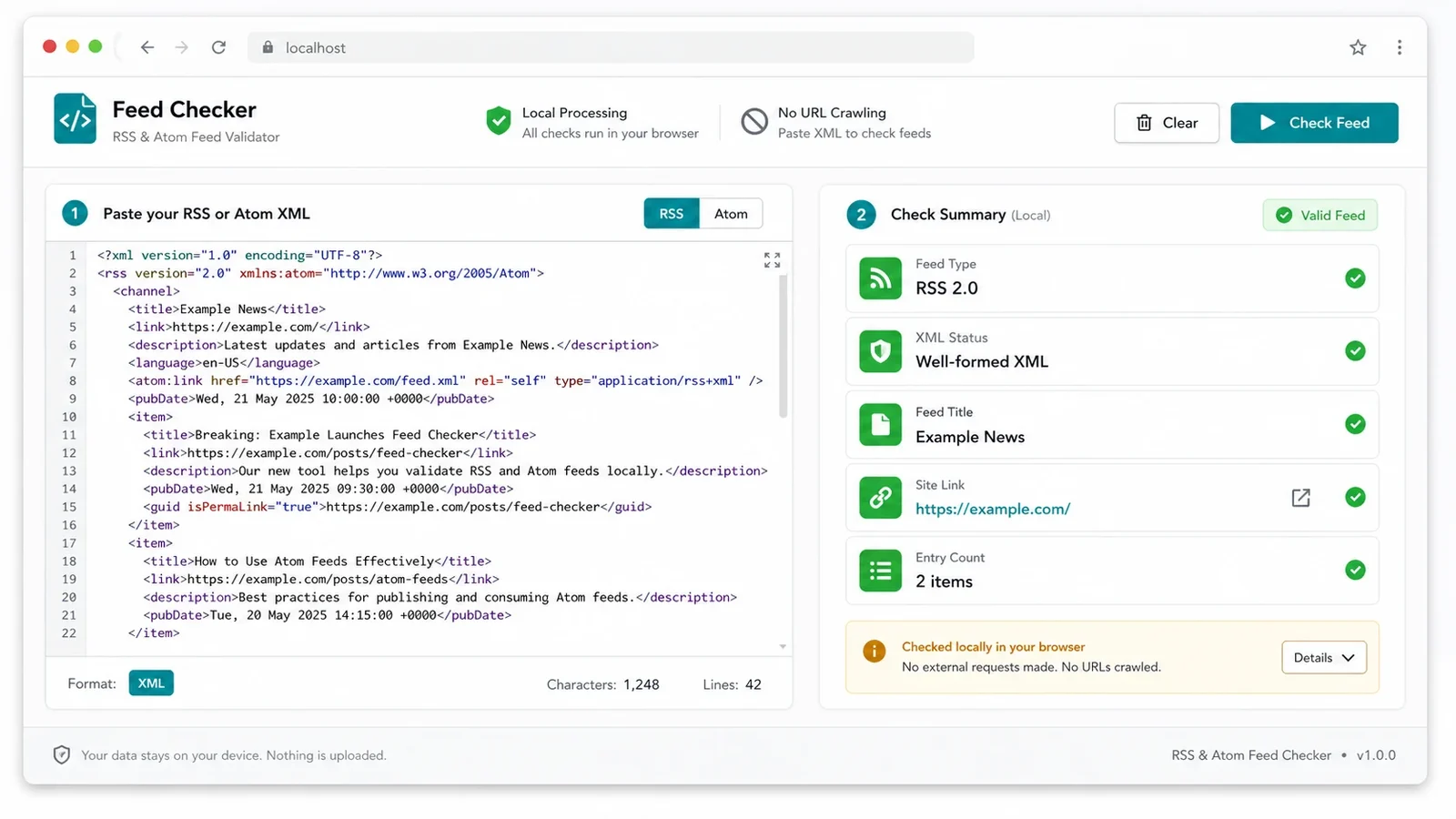
Detect RSS channel XML or Atom feed XML and show the feed type, XML parse state, title, site link and item or entry count.
Free RSS and Atom Feed Checker
Feed XML is checked locally in your browser. No live feed URL crawling is required. Paste or upload RSS or Atom XML into the RSS and Atom Feed Checker to review feed structure, item or entry fields, duplicate links, duplicate guid values, date formats, titles, content fields and podcast enclosure basics without fetching a URL.
Browser-local feed XML audit
This local feed checker parses pasted or uploaded XML in this tab, detects RSS or Atom, then checks channel or feed basics, item or entry fields, duplicate identifiers, date formats, empty titles, long titles and enclosure attributes.
Your RSS or Atom XML stays in this browser tab. This checker does not upload feed content.
This checker does not crawl live feed URLs, monitor availability, verify subscriber compatibility or test whether links return 404.
Feed XML results will appear here
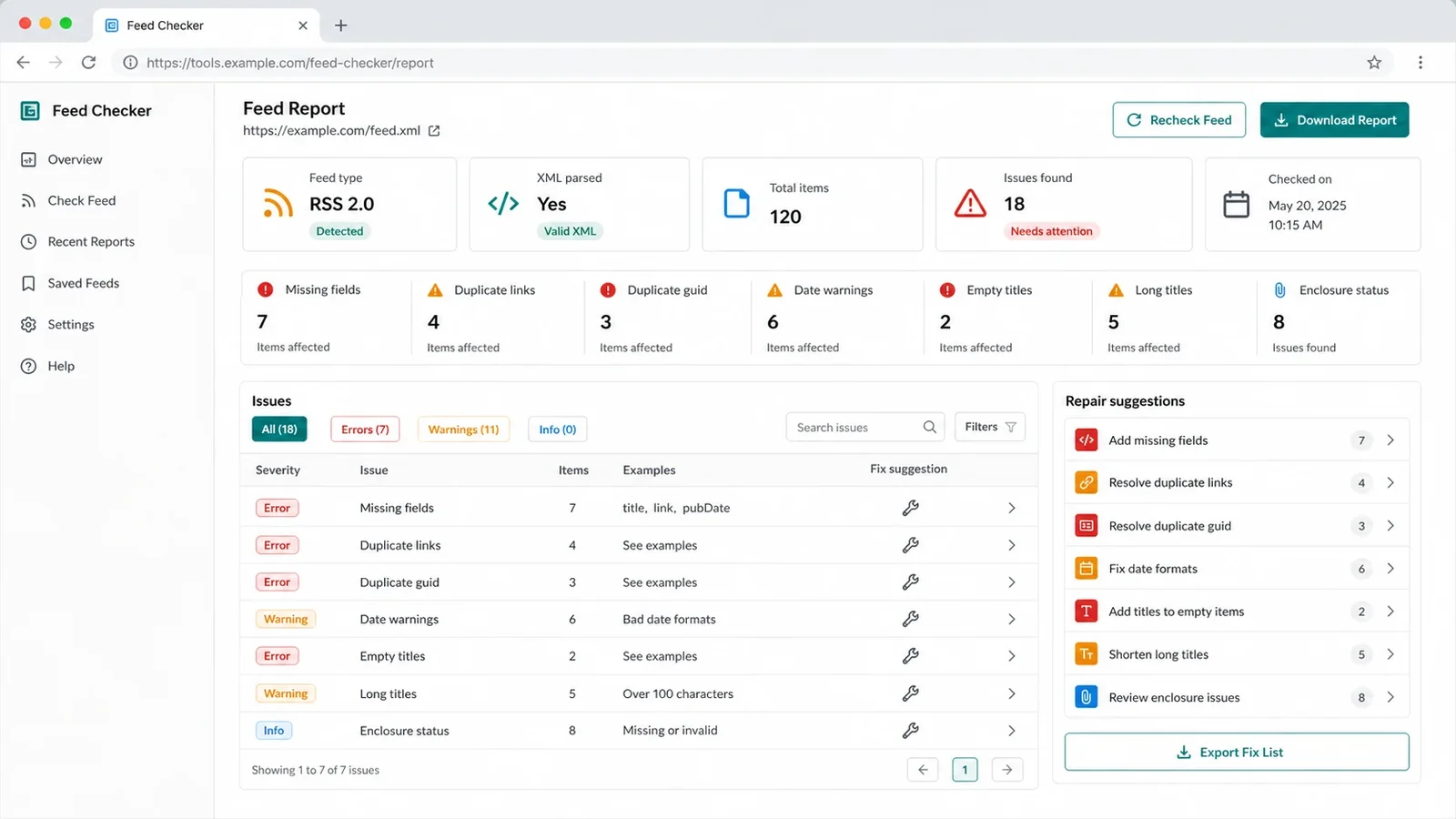
Paste or upload RSS or Atom XML to see feed type, XML parse status, feed title, site link, item or entry count, missing fields, duplicate links, duplicate guid or id values, date warnings, title warnings, enclosure status, main issues and repair suggestions.
Issues
0
Fail
0
Review
0
Pass
0
This page combines RSS Checker, Atom Feed Checker, Podcast Feed Basic Checker and Feed XML Checker workflows into one local report.
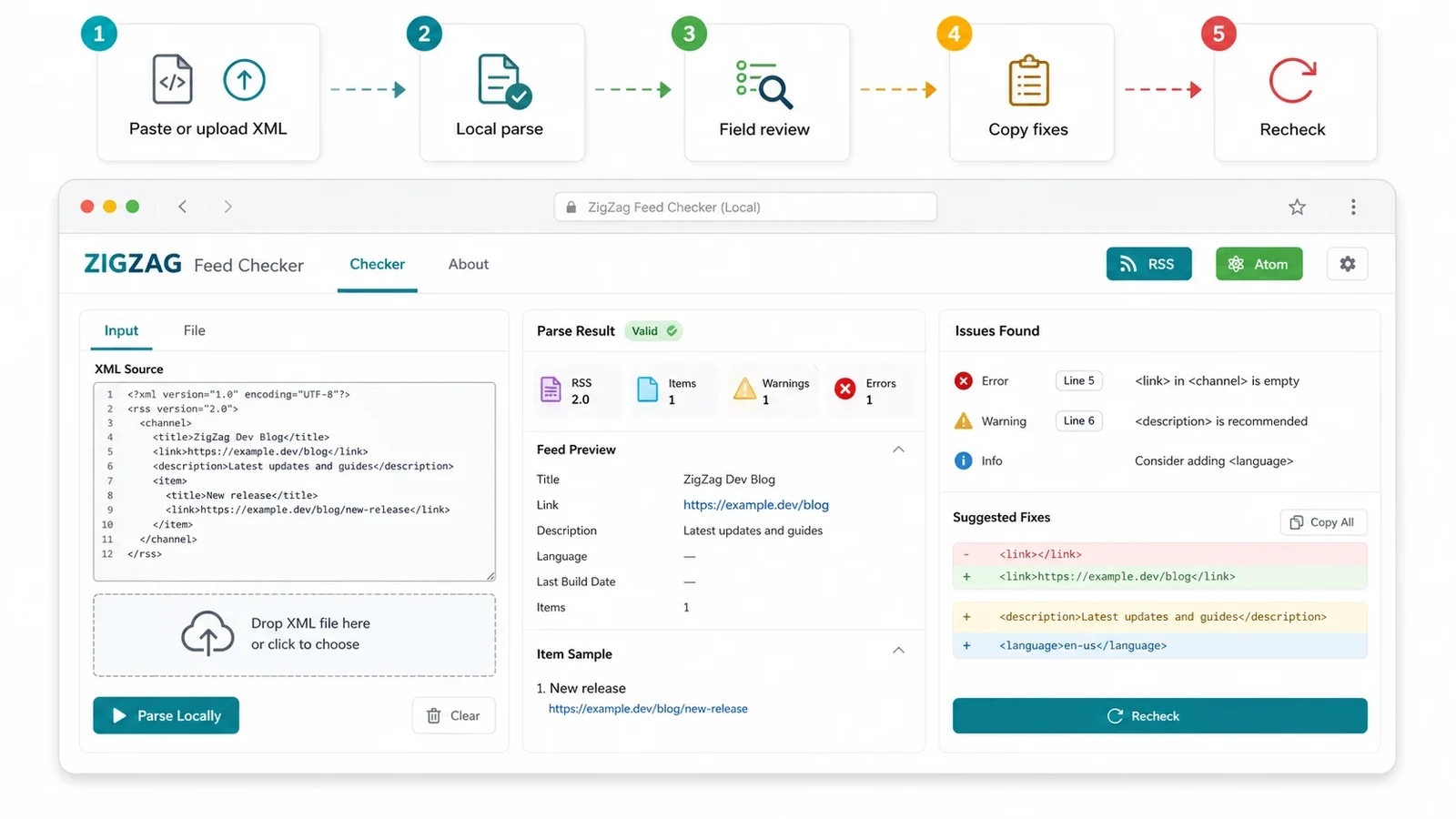
Paste or upload raw feed XML. The tool detects RSS or Atom and parses XML in the browser without requesting a live feed URL.
Review missing fields, duplicate links, duplicate guid or id values, date format warnings, empty titles, long titles, enclosure status and main repair suggestions.
Copy the suggestions, update the XML in your CMS or repository, then paste the revised feed again for another local structure check.
Use this local checker before publishing a blog feed, changelog feed, podcast feed or CMS migration feed.
Detect RSS channel XML or Atom feed XML and show the feed type, XML parse state, title, site link and item or entry count.
Check channel or feed basics plus item and entry title, link, guid, id, pubDate, updated, author, description, summary and content fields.
Find duplicate links and duplicate guid or id values that can confuse update tracking in feed readers.
Flag RSS pubDate values that do not look like RFC 822 dates and Atom updated values that do not look like ISO date-times.
Review podcast-style RSS enclosure url, type and length attributes, plus Atom enclosure href and type values.
Use local structure checks only. This checker does not crawl live feed URLs, monitor uptime, test 404s or verify real subscriber compatibility.
This tool is designed for raw XML copied from a CMS, repository, export file or generated feed preview.
Paste the RSS or Atom XML text, or upload an .xml, .rss or .atom file. Do not paste a live feed URL because this tool intentionally avoids crawling.
The browser parses the XML, detects RSS or Atom, counts items or entries and prepares a structured report without sending the feed content away.
Start with XML status, feed title, site link and item or entry count, then review missing fields, duplicates, date warnings, title warnings and enclosure status.
Copy repair suggestions, update the source feed template or CMS settings, then paste the revised XML again before publishing or handing it off.
Use these notes to understand privacy, supported input and result limits.
No. It only checks XML you paste or upload. It does not request live feed URLs, run an availability monitor, detect 404 responses or verify real subscriber behavior.
It supports common RSS 2.0 style XML with an rss and channel structure, plus Atom XML with a feed root. It is a local structure checker, not an official validator for every extension.
Yes, for basic structure. It reports RSS enclosure counts and flags missing enclosure url, type or numeric length attributes. It does not test podcast directory acceptance.
Feed readers often use stable identifiers to recognize updates. Duplicate guid or id values can make different items look like the same entry, so the report highlights them for review.
The XML is parsed in your browser tab and the feed content is not uploaded. Avoid pasting secrets into any web page, but this tool is built for local feed XML checks.
Fix XML syntax first, then fill missing feed and entry fields, make guid or id values unique, normalize date formats and review enclosures. Re-run the local check with the revised XML before publishing.
Paste or upload feed XML and use this local checker to catch structure issues before a CMS release, podcast handoff or migration QA pass.
Local XML structure checking only. No live feed URL crawling is required.